


Contents

01 Proposal Overview
Problem and what we need
Repeated large-scale security and hacking incidents have occurred across major industries,
including telecommunications, finance, and commerce. Following its renewal as a
"Lifestyle Curator," it is now a critical time for Digi-Loca to reassess its roles and structural framework.
What is needed at this moment is, Fundamental consideration to restore customer trust.

032 Defining UX Principles
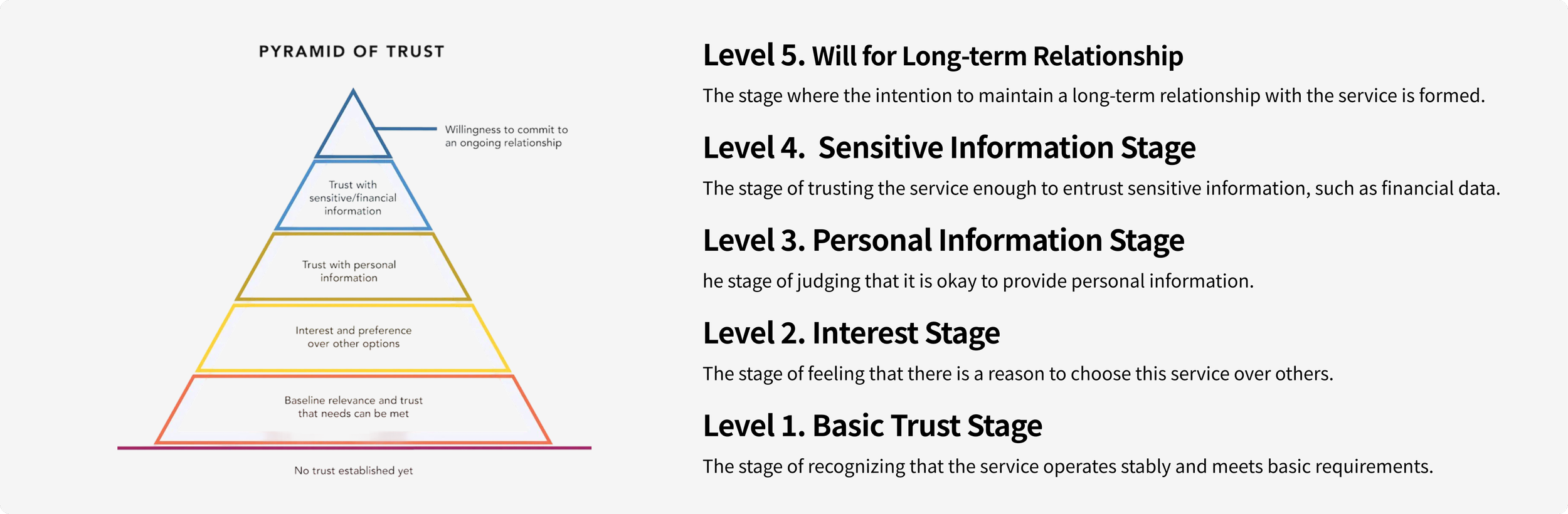
Conditions for Restoring Trust
Users determine the trustworthiness of a service not through technology or specifications, but through the sense of being "professionally managed" provided by a system that functions without errors and is designed with clear information.
032 Defining UX Principles
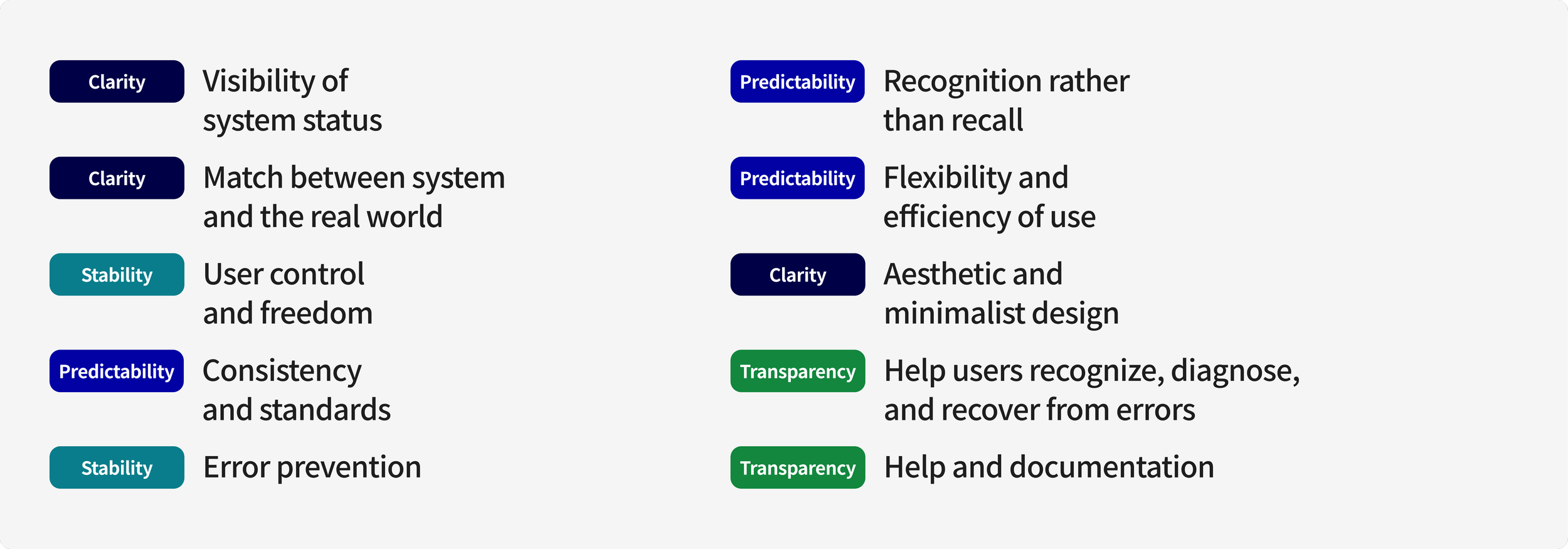
Jakob Nielsen's 10 UX Heuristics
Core UX design principles for building user trust, summarized into four pillars :
Clarity, Transparency, Predictability, and Stability.
032 Defining UX Principles
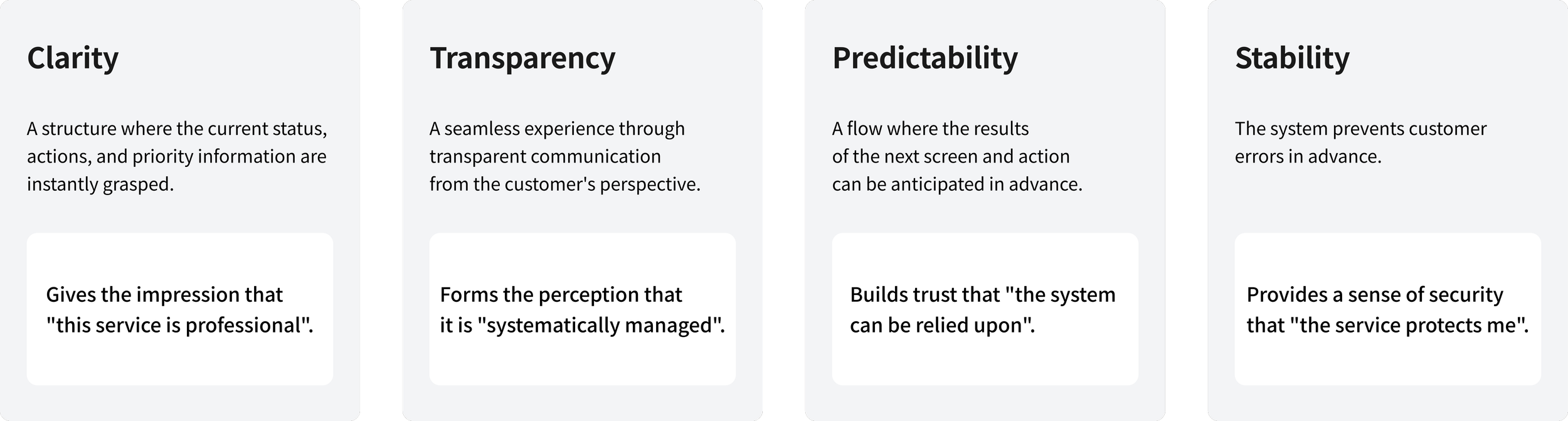
Refined images
Service trust is formed through a UX structure that is clearly visible, transparently explained, predictable, and prevents errors. Additionally, these four principles are organically connected and formed in stages.
032 Defining UX Principles
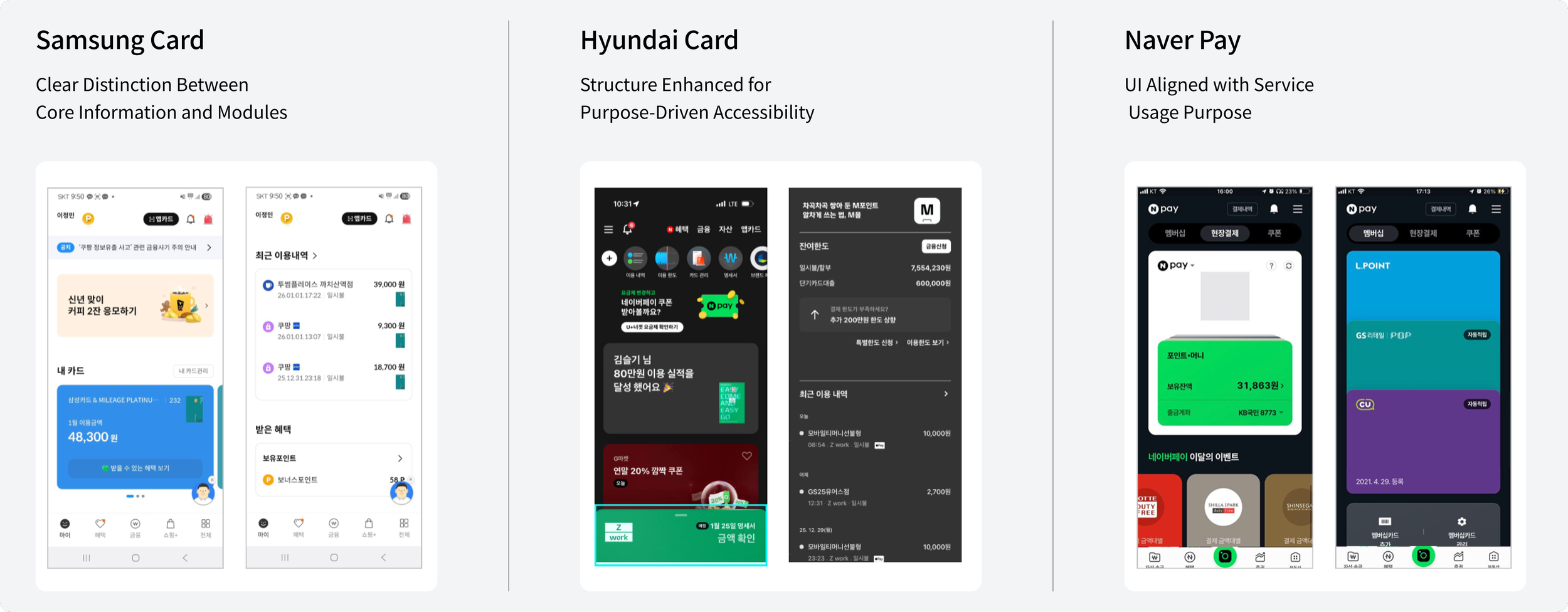
Competitive Analysis - Clarity
Overwhelming screens can cause users to doubt a service. When information is easy to find and clear at a glance, users feel at ease, which ultimately helps build long-term trust.
032 Defining UX Principles
Competitive Analysis - Transparency
Friendly and Clear Explanations to Help Users Understand the Situation : Errors without explanation create distrust, while errors explained in the user's language build trust in the service.
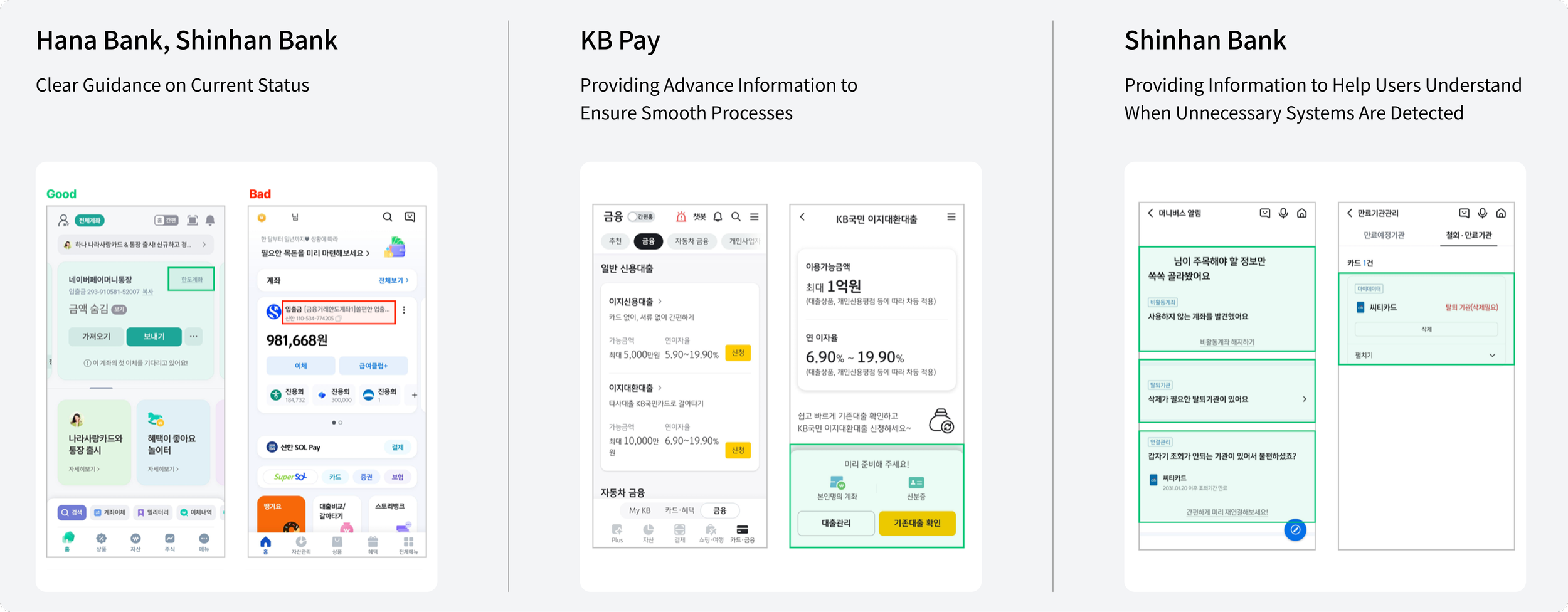
032 Defining UX Principles
Competitive Analysis - Predictability
When action results proceed within an expected range, users feel that they understand the flow and are making their own decisions.
A predictable flow creates a sense of stability in a service.
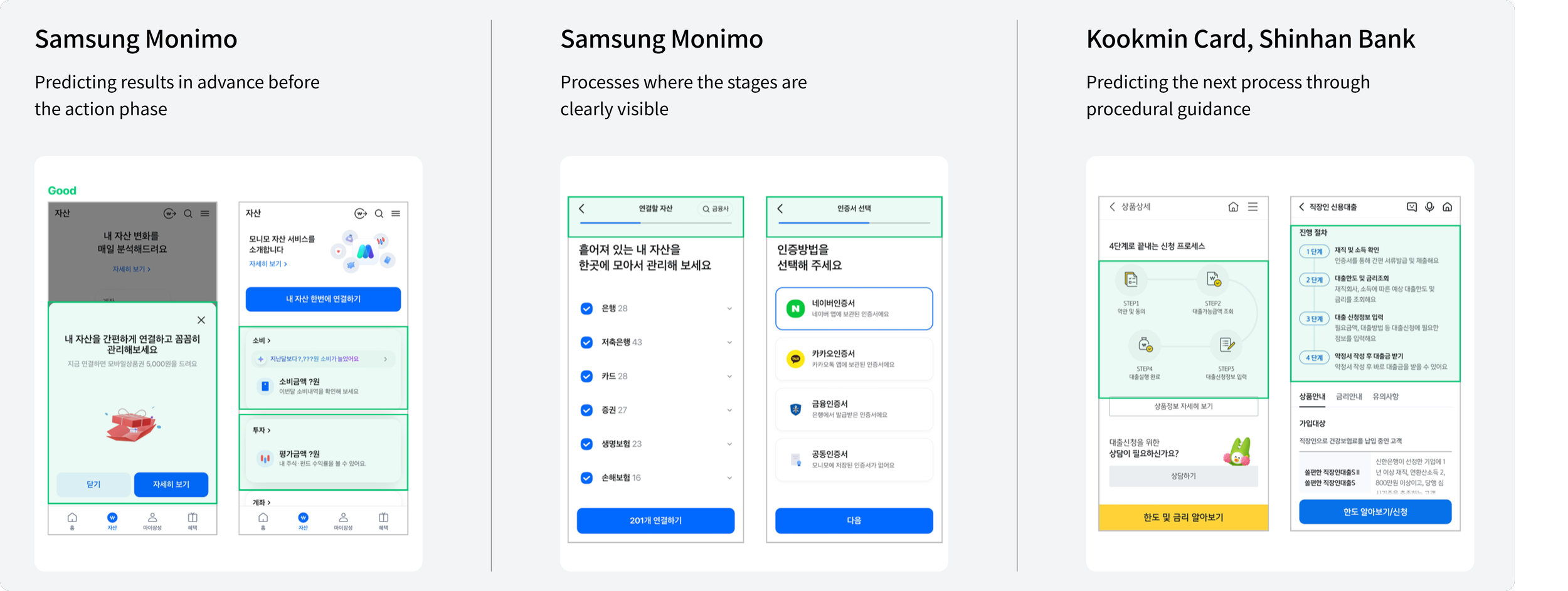
032 Defining UX Principles
Competitive Analysis - Stability
Mistakes should be detected and protected by the system first, not by the individual.
Trust is built not on perfection, but on a safe system that prevents danger.
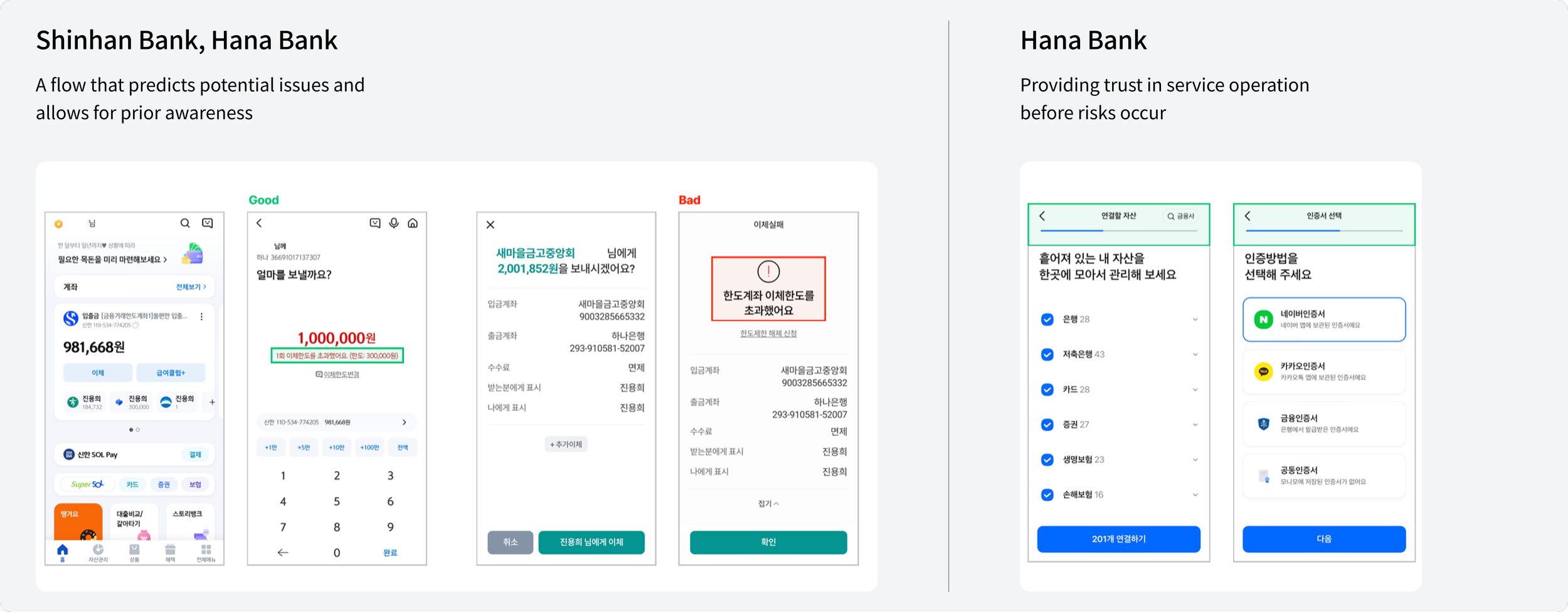
03 Assessment of Current DIGI-LOCA Status
Difficult to find the key information (Clarity)
The excessive exposure of non-core content makes it difficult to find key functionalities, such as card performance,
leading to high information density, reduced intuitiveness, and increased UI complexity.
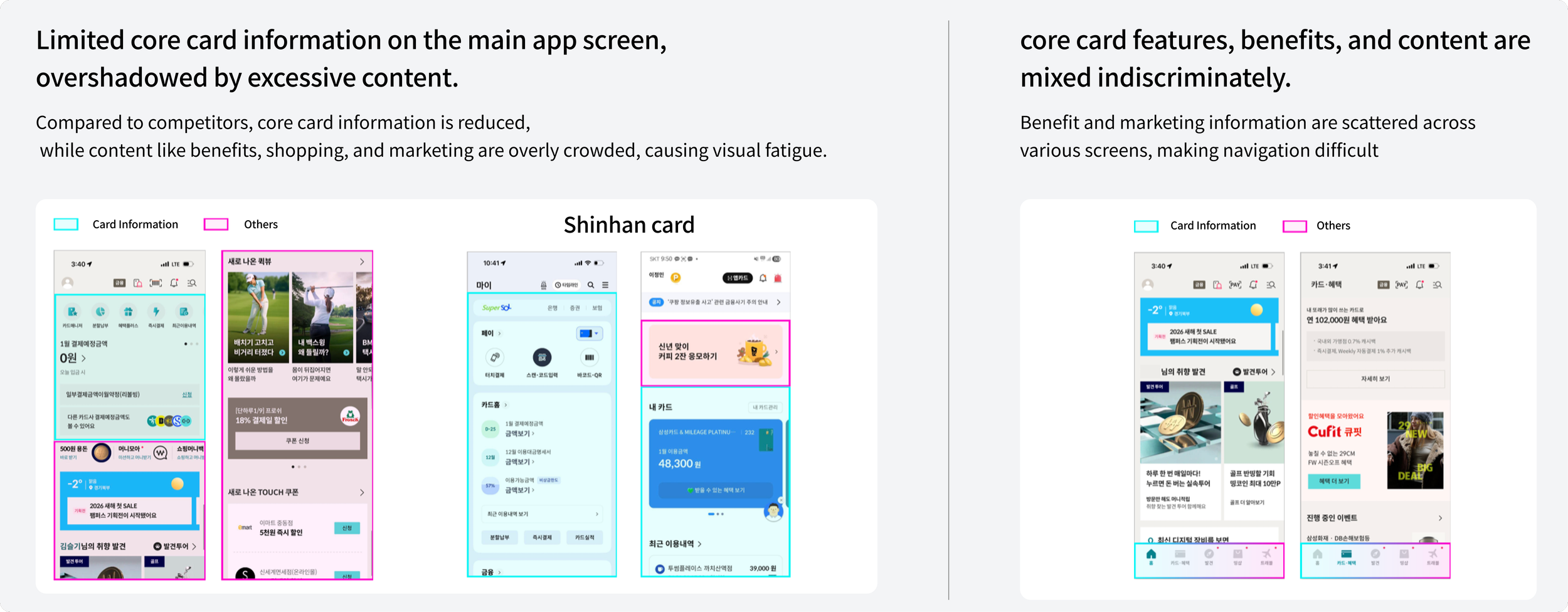
03 Assessment of Current DIGI-LOCA Status
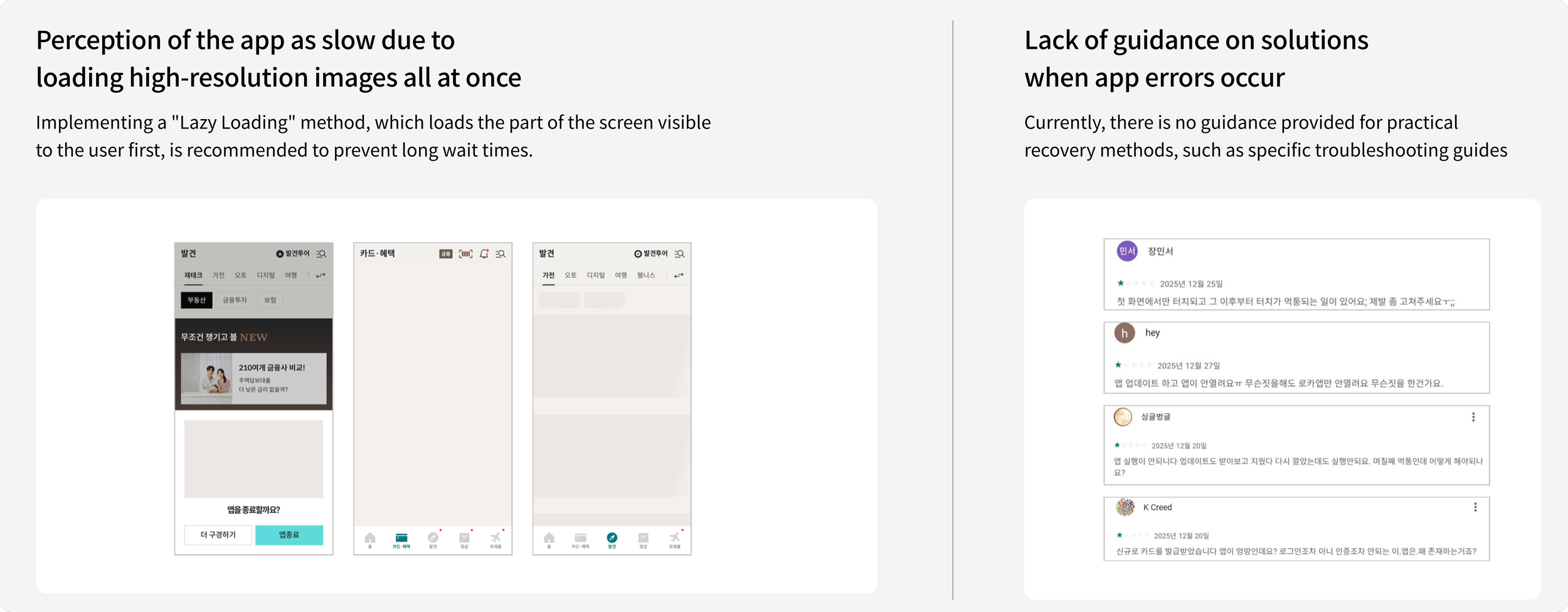
Difficult to find the key information (Transparency)
The excessive exposure of non-core content makes it difficult to find key functionalities, such as card performance,
leading to high information density, reduced intuitiveness, and increased UI complexity.
03 Assessment of Current DIGI-LOCA Status
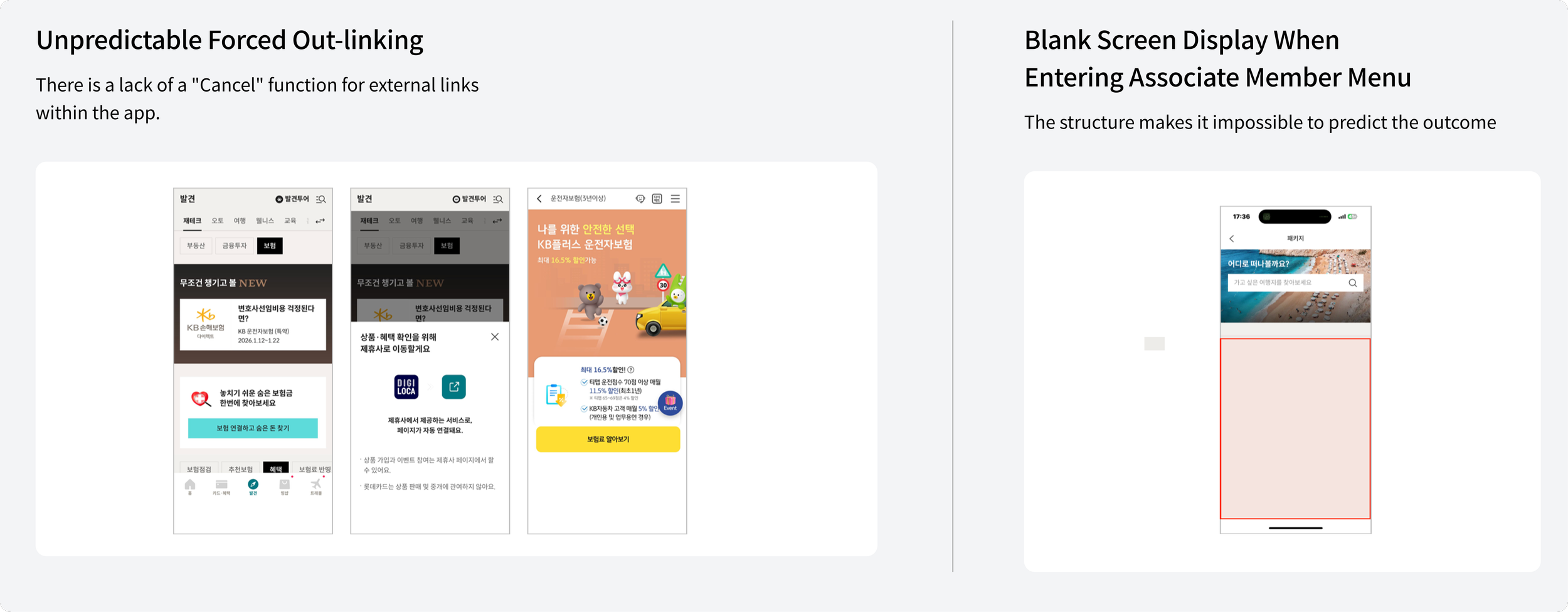
Difficult to find the key information (Predictability)
Users are hesitant to click buttons if they are in an uncertain state, not knowing where they will be linked or if the screen will even load. To ensure users can move smoothly without anxiety, it is necessary to make the next situation clearly predictable.
03 Assessment of Current DIGI-LOCA Status
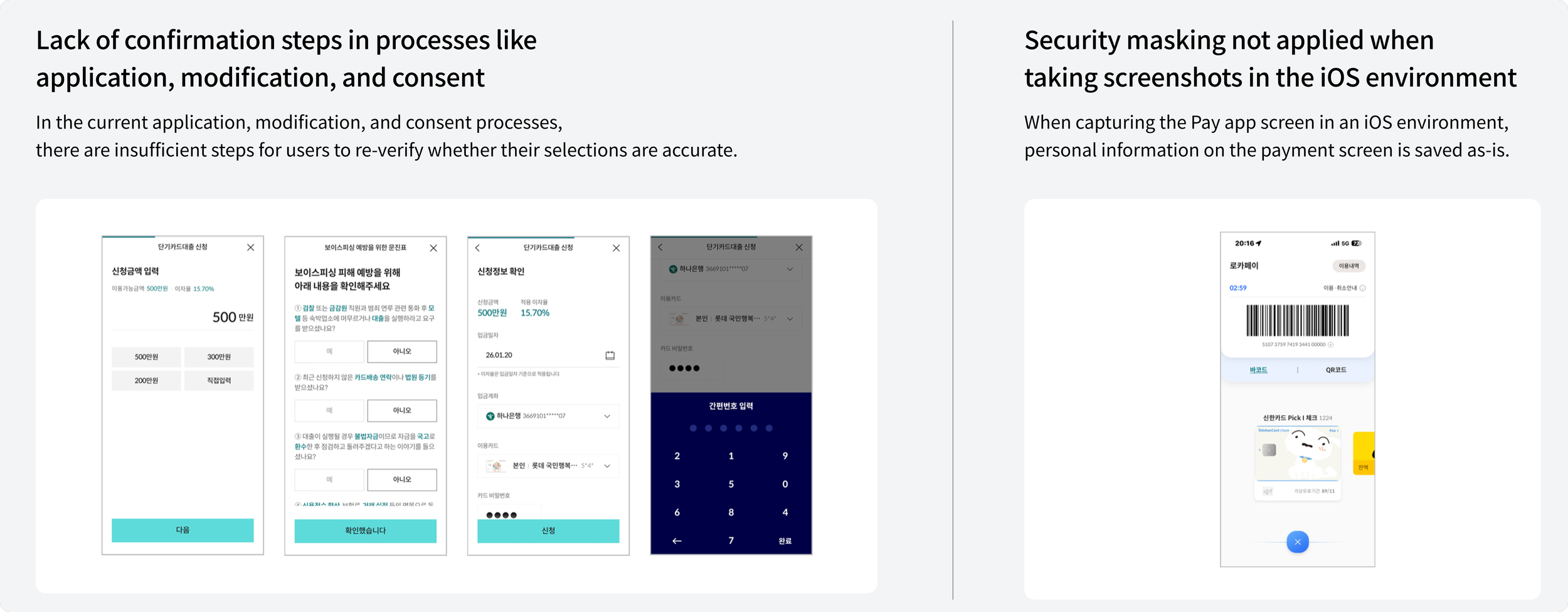
Difficult to prevent customer errors in advance (Stability)
Users are hesitant to click buttons if they are in an uncertain state, not knowing where they will be linked or if the screen will even load. To ensure users can move smoothly without anxiety, it is necessary to make the next situation clearly predictable.
04 Redefining the Role of DIGI LOCA
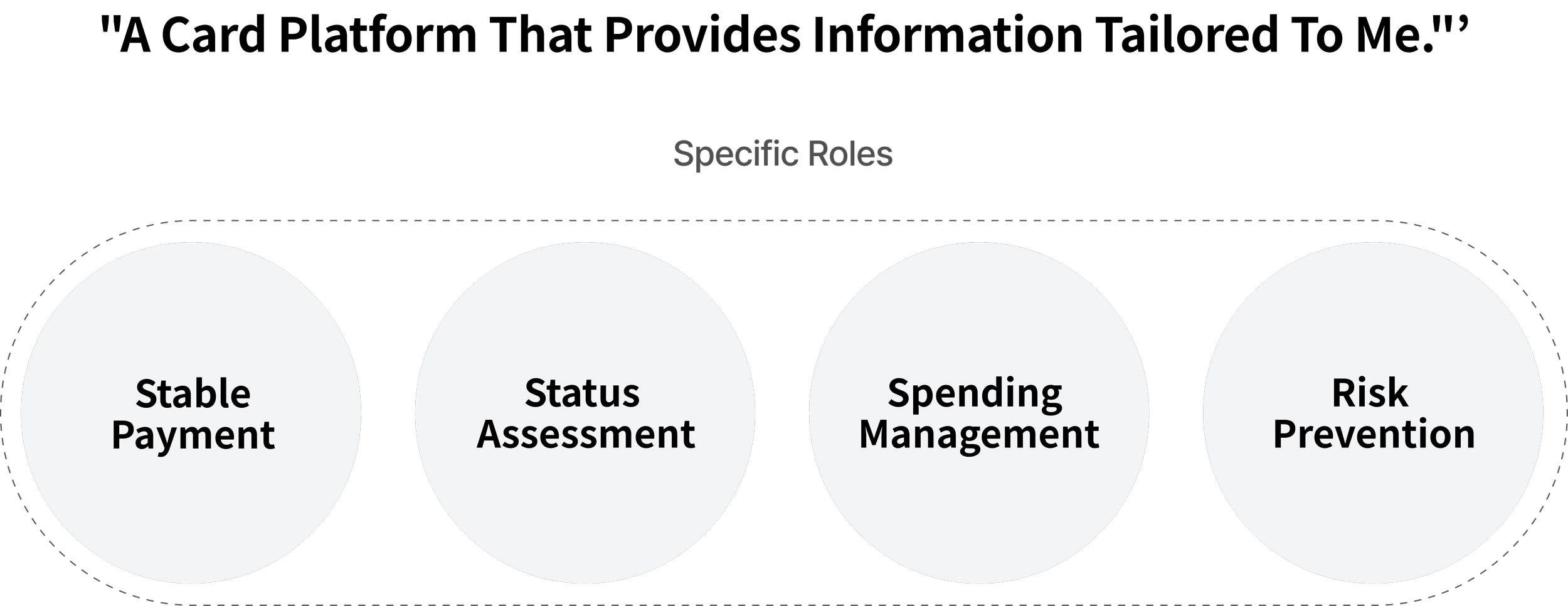
Essential Role of a Card App
Build trust by focusing on fulfilling the essential role of a financial app, rather than just expanding the service.

04 Redefining the Role of DIGI LOCA
Essential Role of a Card App
04 Redefining the Role of DIGI LOCA
Essential Role of a Card App

04 Redefining the Role of DIGI LOCA
Essential Role of a Card App
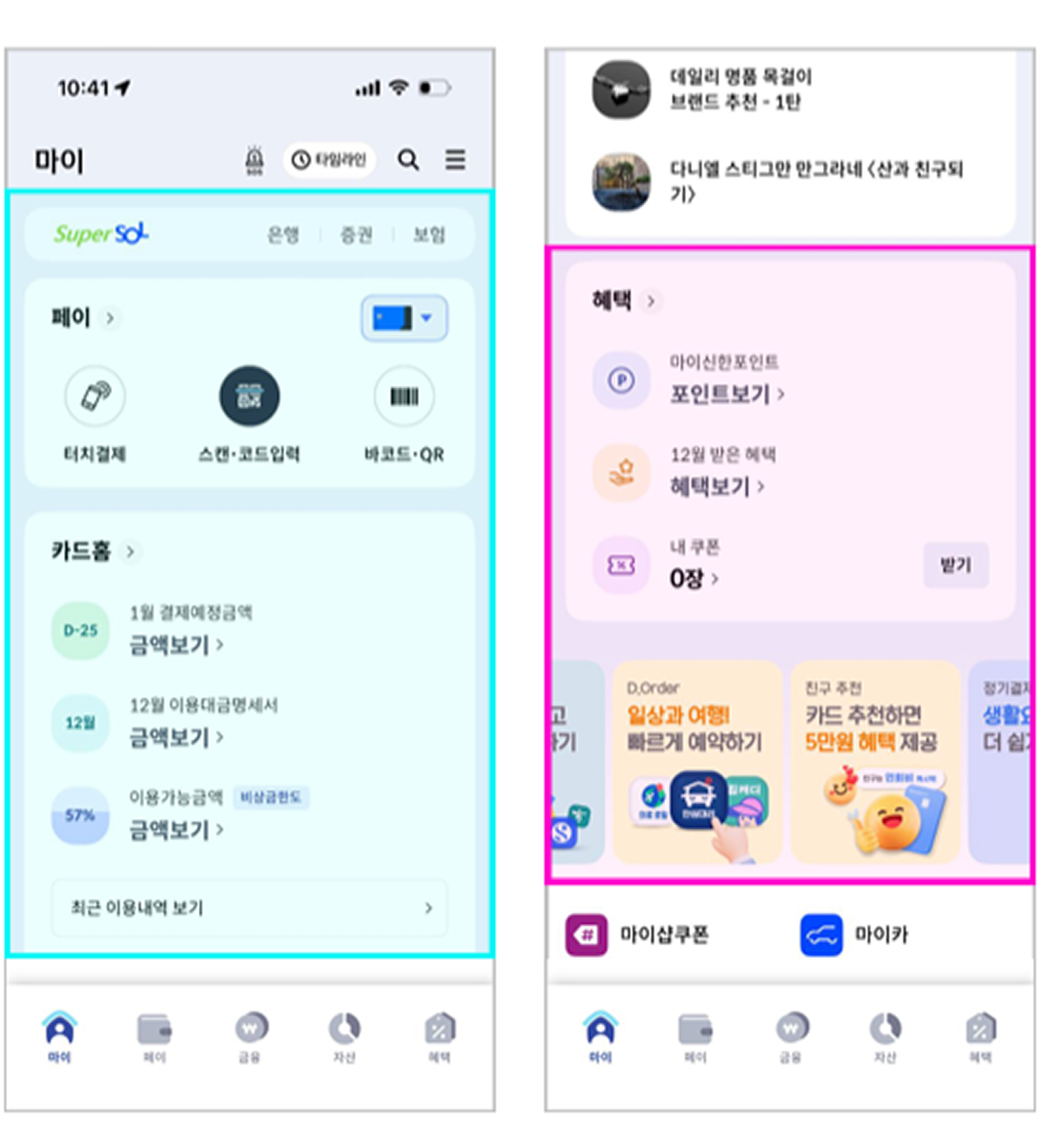
UX Principle ㅡ Clarity
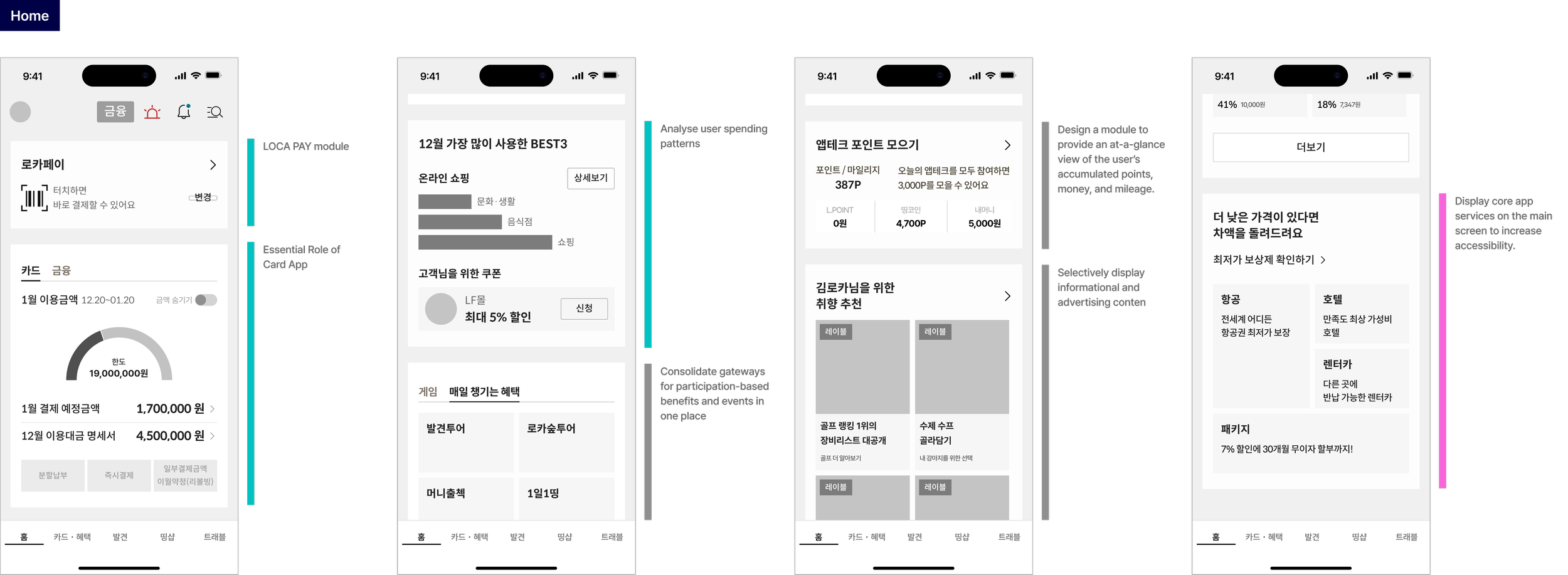
Ensure the independence of financial task areas to convey trust as a card expert, and define those areas as personalized lifestyle spaces.
04 Redefining the Role of DIGI LOCA
Essential Role of a Card App
The intermingling of card tasks, benefits (rewards), and informational content clouds user judgment. By restructuring to match the nature of each function, we design an optimal layout that allows users to experience card tasks "quickly" and benefits "richly".
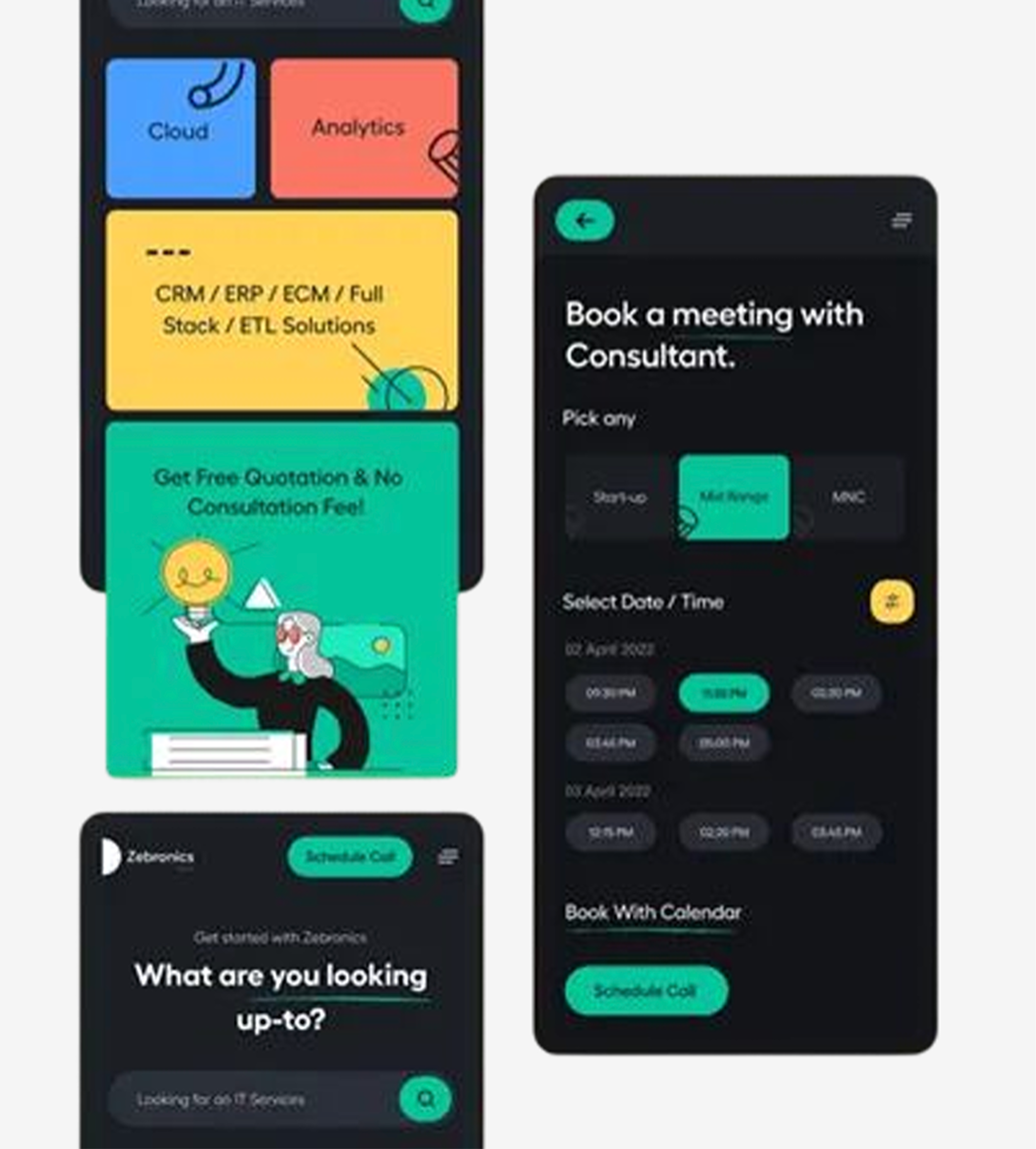
UX Principle ㅡ Clarity
Visual Clarity of Information Hierarchy
Thumb-Friendly Design
High Readability and Organized Feel
Responsiveness and Scalability
04 Redefining the Role of DIGI LOCA
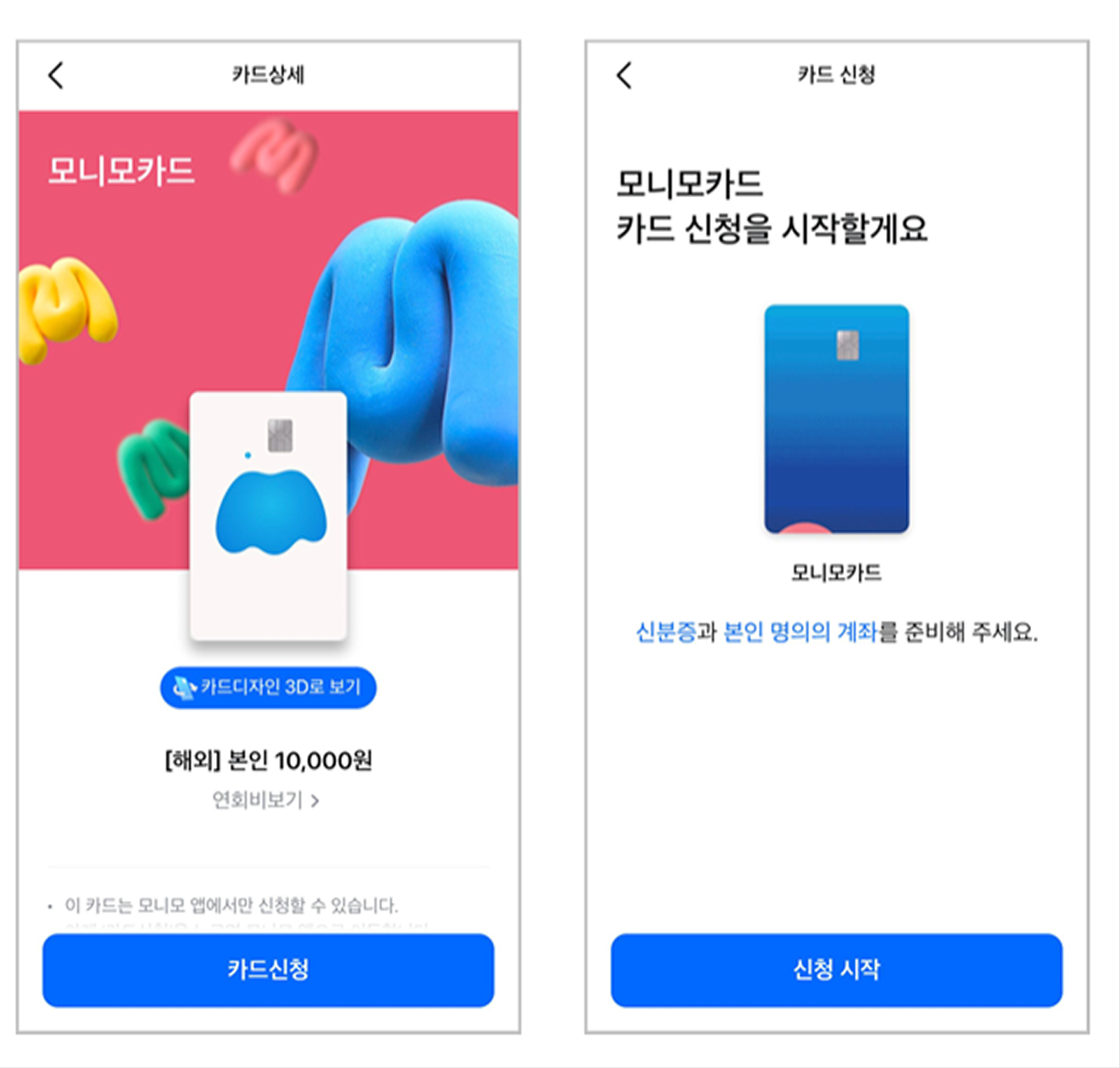
Seamless Financial Experience
Reduce confusion and prevent service abandonment by providing clear guidance whenever users encounter difficulties during their journey.
UX Principle ㅡ Predictability
04 Redefining the Role of DIGI LOCA
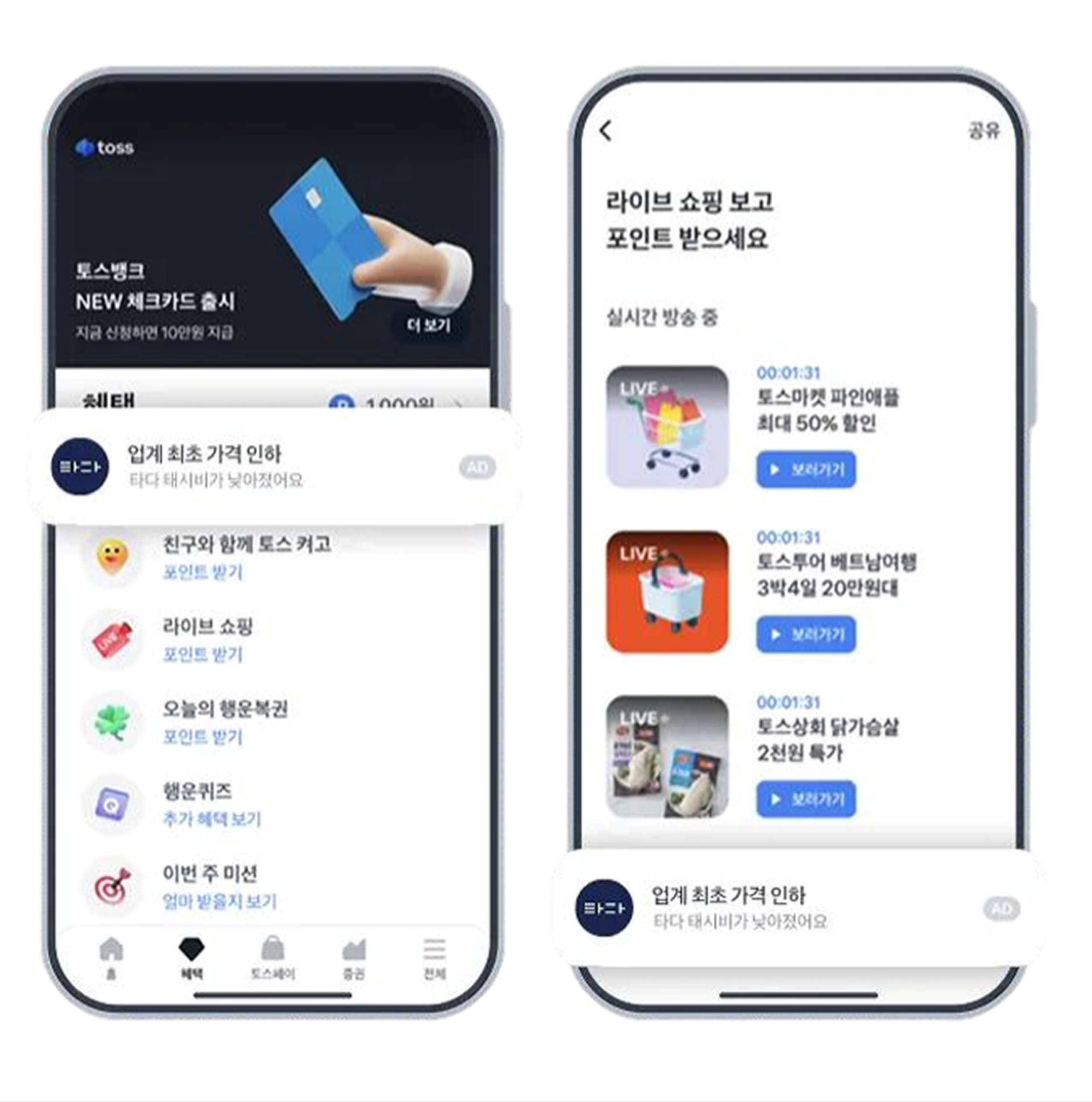
Aiming for User-Centric Marketing Communication
UX Principle ㅡ Transparency
Minimize unnecessary generic benefit notifications and selectively deliver only relevant information that aligns with the user's context.
04 Redefining the Role of DIGI LOCA
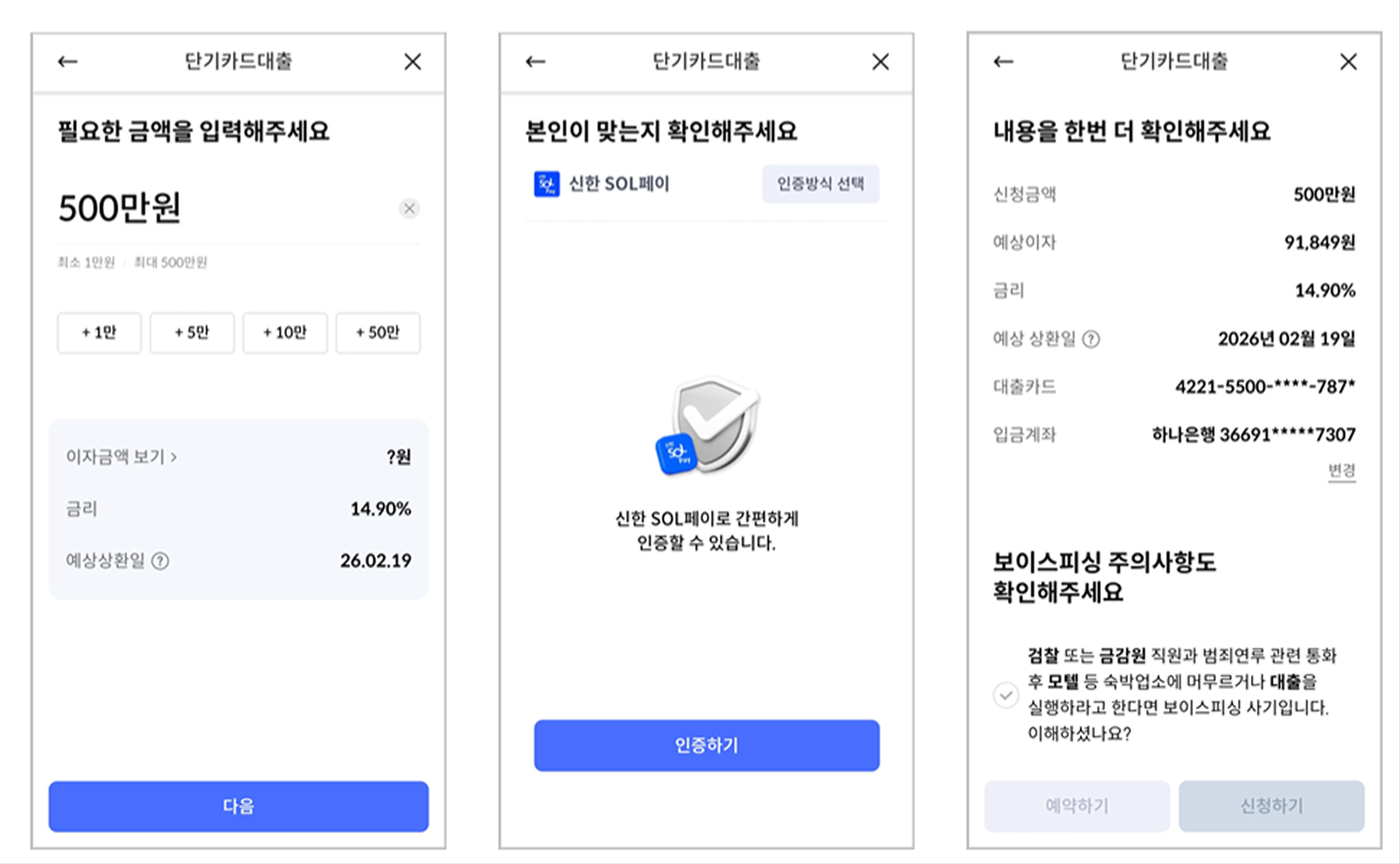
Financial Security Design
UX Principle ㅡ Stability
Establish a psychological safety net for users by strengthening "re-verification procedures" during critical decision-making stages, such as asset transfers and contract execution.
Wireframe - Maximizing Retention of Main Screen Services
05 Wireframes
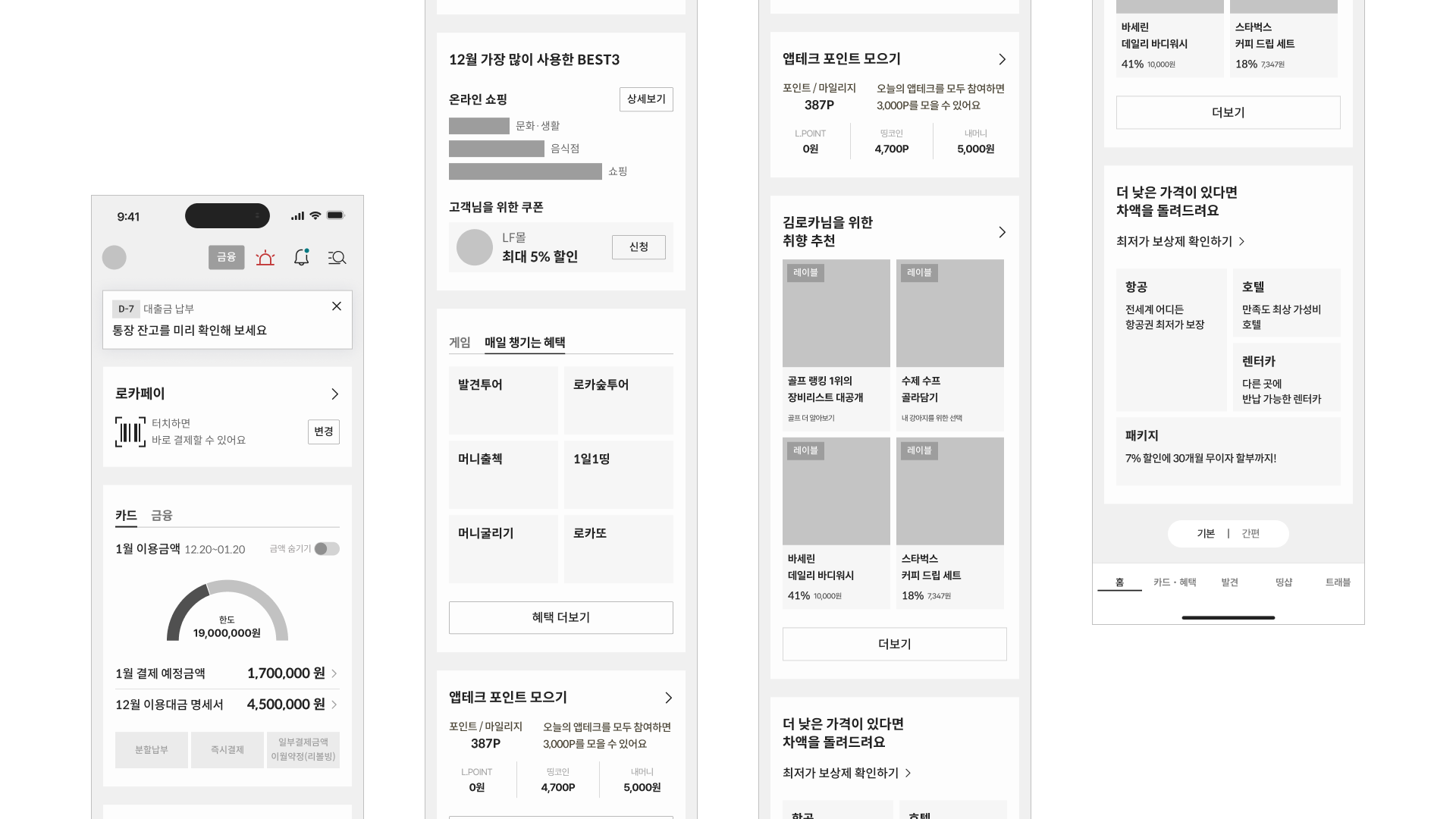
Addition
Reflection
Balancing Core Functionality with Engagement: The Path to User Trust
"Through this project, I learned that the essence of great UX lies in reducing friction while maintaining absolute transparency. Organizing complex financial data into a clean, intuitive layout was a significant challenge. I observed that while users primarily visit a card app to track their spending, many current apps—including the DIGI LOCA app—often obscure these core functions with an overwhelming amount of promotional content.
This experience taught me the critical importance of prioritizing core services to drive user retention and minimize drop-offs. I realized that beyond mere aesthetics, the key to building user trust is finding the right equilibrium between functional clarity and promotional value. By strategically balancing essential financial tools with relevant engagement features, I was able to develop a more user-centric perspective, one that prioritizes providing real value and reliability over simple visual appeal."